
Description
Core Matching Concept
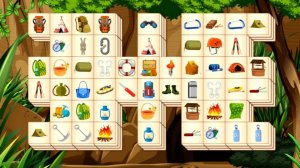
At its heart, Match Two Tiles Puzzle revolves around a simple yet satisfying objective: remove every tile from the board by finding and selecting pairs that share the same pattern. The grid presents a colorful array of designs, and each successful match clears those two tiles. The challenge lies in identifying which tiles are currently accessible—only those not blocked on their left or right can be chosen. This rule encourages careful observation and forward thinking, as players must plan their moves to avoid getting stuck. The board gradually empties, providing a clear sense of progress with each pair removed.
Accessibility and Ease of Play
This puzzle is designed to be instantly understandable, requiring no prior experience or lengthy tutorials. Players simply tap on two matching tiles that are free on at least one side. Some versions may also allow matching along straight horizontal or vertical lines, adding a subtle layer of strategy. The controls are intuitive and responsive, making the game suitable for children, adults, and seniors alike. The lack of a time limit means everyone can proceed at their own comfortable pace, focusing on thoughtful decision-making rather than speed.
Visual and Audio Atmosphere
The visual presentation typically features bright, clear graphics that make each tile distinct and easy to identify. Colorful designs and a clean layout contribute to a relaxing environment. Sound effects, if present, are usually gentle and unobtrusive, reinforcing the calm nature of the experience. The overall aesthetic aims to reduce visual clutter, allowing players to concentrate on the matching task without distraction. This thoughtful design helps maintain a soothing mood throughout each session.
Built-in Assistance Options
When players encounter a situation where no immediate matches are available, the game often provides helpful tools to keep the game moving. A shuffle function rearranges the remaining tiles, potentially creating new matching opportunities. A hint feature may highlight a possible pair, offering guidance without removing the player's agency. These aids are typically limited in availability, encouraging players to rely on their own skills first. The inclusion of such options ensures that progress rarely comes to a complete halt, reducing frustration.
Gradual Difficulty Curve
As players advance through the game, the puzzles become progressively more complex. Early boards may have fewer tiles and simpler patterns, allowing newcomers to grasp the mechanics. Later stages introduce larger grids and more intricate designs, requiring greater concentration and planning. This steady increase in difficulty keeps the experience engaging without becoming overwhelming. The pacing ensures that players can build their matching skills naturally over time.
Player Comments
Sign in to comment
You must be logged in before posting a review or rating.
No account? Create one
No comments yet. Be the first to comment!